
Is Builder Grade Really So Bad?
I've spent enough time tearing apart kitchens and bathrooms to know that "builder grade" has become one of those phrases people love to throw around. Most of the time it's used as an insult. A homeowner points at a cabinet or a faucet and says, "It's just builder grade," as if that alone explains everything that's wrong with it.
The truth is a little more complicated.
A few months ago I was working in a home that was built in the early 90s. The owners were finally ready to remodel the kitchen. Nothing was technically broken. The cabinet doors still opened and closed. The countertops still held dishes. The lights turned on when you flipped the switch. By most standards, the kitchen was doing exactly what it was designed to do. But standing in that space, it was obvious that the room had reached the end of its useful life for that family.

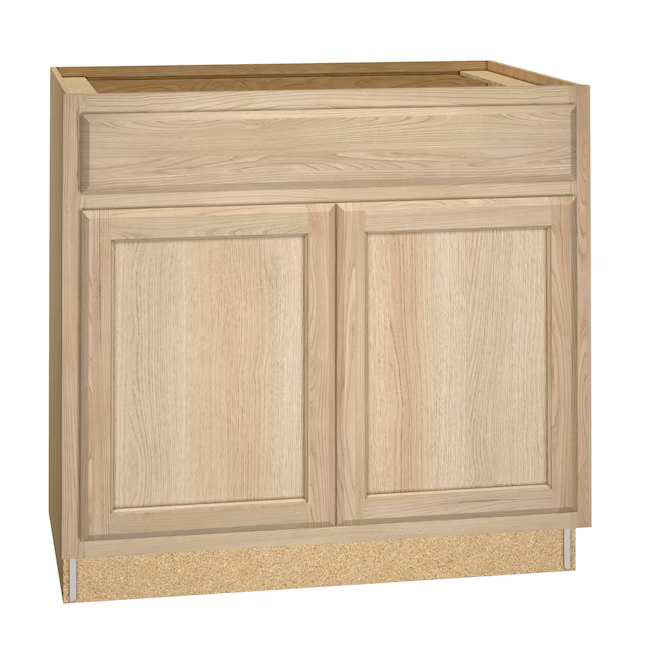

The cabinets were shallow. Storage was awkward. There wasn't a good place to gather. Every small appliance lived permanently on the countertop because there was nowhere else to put it. The finishes felt dated, but that wasn't really the problem. The bigger issue was that the kitchen had been designed for a version of life that no longer existed or maybe never existed in the first place.
Here’s the thing… Most builder homes are designed around averages. Average family size. Average budget. Average tastes. Average needs. Builders have to think that way because they're building homes for thousands of people they haven't met yet. They aren't designing for you. They're designing for the market. And there's nothing wrong with that approach. In fact, it's the reason many people are able to buy homes in the first place.
The tradeoff is that averages rarely fit anyone particularly well.
When a production builder is constructing hundreds of homes, every decision gets filtered through a question most homeowners never have to ask themselves: How do we make this look appealing while keeping costs under control? Sometimes that means using particle board cabinet boxes instead of plywood. Sometimes it means selecting a basic plumbing fixture instead of a premium one. Sometimes it means simplifying trim details, reducing lighting, or choosing stock cabinetry sizes that fit most situations instead of creating solutions for specific families. Again, none of those decisions are necessarily wrong.
What becomes interesting is what happens ten or fifteen years later.
The family has changed. Kids have grown up. Hobbies have changed. People are spending more time at home than they did when they first moved in. The house hasn't necessarily failed them. It's just no longer keeping pace with the way they live.
I think that's why remodeling has become so appealing for many homeowners. It isn't always about luxury. Sometimes it's simply about finally having the opportunity to make decisions that were made for you the first time around.

Take cabinetry as an example. Most homeowners start by talking about colors or door styles, but that's rarely what they're happiest about when the project is finished. What they remember is having a place for everything. Deep drawers for pots and pans. Rollout shelves that don't require crawling on the floor to find a mixing bowl. A pantry that actually makes sense. Trash and recycling hidden where they're useful rather than where they happened to fit on a plan set twenty years ago.
The same thing happens with fixtures, lighting, and finishes. People assume they're buying nicer materials, and they are, but what they're really buying is a better experience.
A faucet isn't exciting because it costs more. It's exciting because it works better every single day (and doesn’t wiggle when you go to turn it on.) Under-cabinet lighting isn't valuable because it's a trendy feature. It's valuable because it solves a problem that annoyed you every evening for years. Durable cabinet finishes matter because life happens. Kids happen. Dogs happen. Holiday gatherings happen.
The longer I work in this industry, the less interested I become in selling products and the more interested I become in fixing those little things around the home that drive you nuts. Every house has them. Sometimes it's obvious and sometimes it's subtle. A cabinet door that always bumps another cabinet door. A kitchen island that's six inches too small. A bathroom vanity that leaves no room for storage. Tiny frustrations that seem insignificant until you multiply them by thousands of days.
That's usually the moment when a remodel starts making sense. Not because the existing materials are bad or because the builder cut corners. The house simply wasn't designed around the life being lived inside it today.
And that's the real opportunity remodeling creates. It gives homeowners a chance to stop living with decisions that were made for a hypothetical buyer years ago and start building spaces around the people who actually call the house home.
My Unfiltered Opinions About Builder Grade.
Now that I've spent a few thousand words defending builder grade, I should probably admit something… There are plenty of situations where I think home builders deserve criticism.
I understand why builder-grade products exist. I understand the economics of large-scale development. I understand that builders are trying to deliver homes at a price point buyers can afford. Those realities aren't going away, and pretending otherwise isn't helpful. What I have a harder time accepting is how much the pursuit of profit seems to have accelerated the race to the bottom over the last decade.
The homes being built today aren't the same as the homes being built at the turn of the century, even. In many cases, they're objectively built with lower-quality materials. Cabinets feel lighter. Hardware fails sooner. Flooring wears faster. Trim details are simplified. Storage is minimized. Construction schedules are compressed. The pressure to build faster and cheaper seems to show up everywhere.
And what surprises me most is how young many of these homes are. It's not unusual for us to walk into a kitchen that's only ten or fifteen years old and find cabinets that are swollen from minor moisture exposure, drawer boxes that are falling apart, laminate finishes that are peeling, or fixtures that have already reached the end of their useful life. These aren't homes from the 1970s that have simply reached the end of a long service life. Many were built during a period when you'd expect them to still be in their prime.
That’s why, I don't blame homeowners for being frustrated when they're considering a renovation on a house that shouldn’t even feel old yet. The reality is that many large builders aren't designing homes to look great twenty-five years from now. They're designing homes to sell today. Those are two very different goals, and anyone who has spent enough time behind the walls or inside the cabinetry can see the difference.
That may sound harsh, but it's the honest conclusion I've reached after years of remodeling homes throughout the Denver area.
Builder grade as a category isn't the problem. The problem is when cost-cutting becomes so aggressive that durability, craftsmanship, and longevity become secondary considerations.
A home is the largest investment most families will ever make. It should be built with enough quality to serve them well for decades, not just long enough to make it past the warranty period. That's why I believe remodeling remains such a worthwhile investment. Not because every home needs luxury finishes or custom everything, but because homeowners finally have an opportunity to make decisions based on long-term value rather than short-term construction budgets.
And frankly, I think that's how homes should be built in the first place.